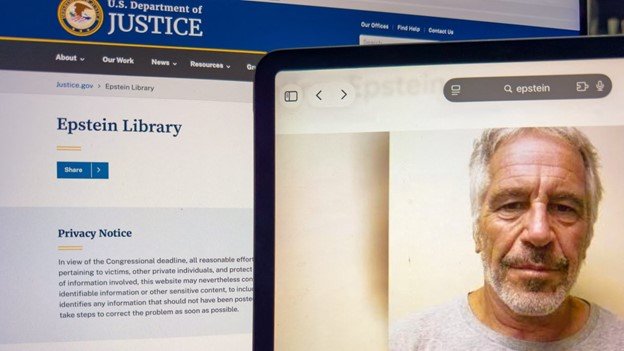
The Justice Department announced Wednesday that it is reviewing whether it improperly withheld documents from the Jeffrey Epstein case, after news outlets reported that some records involving uncorroborated allegations against President Donald Trump were not included in public releases.
Reports indicated that a large batch of documents released by the department did not contain several summaries of interviews conducted by the FBI with a woman who came forward after Epstein’s 2019 arrest. She alleged that she had been sexually assaulted as a minor in the 1980s by both Epstein and Trump.
“Several individuals and news outlets have recently flagged files related to documents produced to Ghislaine Maxwell in discovery of her criminal case that they claim appear to be missing,” the Justice Department said in a post on X. “As with all documents that have been flagged by the public, the Department is currently reviewing files within that category of the production.” Maxwell, Epstein’s longtime associate, is serving a 20-year prison sentence for sex trafficking.
The department said that if any document is found to have been improperly withheld and is subject to federal law requiring release, “the Department will of course publish it, consistent with the law.”
The controversy centers on a series of interviews conducted in 2019 with the woman who accused Trump, who has consistently denied the allegations. News reports say she was interviewed four times, but only a summary of one interview appeared in the publicly released files.
The missing records were first reported by journalist Roger Sollenberger on Substack and NPR and have since been cited by The New York Times, MS Now, and CNN.
Rep. Robert Garcia, the top Democrat on the House Oversight Committee, said his panel would investigate the withheld records. Reviewing unredacted evidence logs, he said, “I can confirm that the DOJ appears to have illegally withheld FBI interviews” with the accuser.
Last month, the Justice Department released more than 3 million pages of records related to Epstein, who died by suicide in a New York jail in 2019 while awaiting sex trafficking trial. The department said it sought transparency but noted it could withhold records that revealed potential victims, duplicates, materials protected by legal privileges, or information tied to ongoing investigations.
“Some of the documents contain untrue and sensationalist claims against President Trump that were submitted to the FBI right before the 2020 election. To be clear, the claims are unfounded and false, and if they have a shred of credibility, they certainly would have been weaponized against President Trump already,” the department said last month when releasing the records.
The redaction process has faced criticism. The department withdrew some materials identified by victims or their attorneys, along with a “substantial number” flagged independently by the government.
Lawyers for Epstein’s accusers told a New York judge that the latest release had “turned upside down” the lives of nearly 100 victims due to sloppy redactions. Exposed materials included nude photos showing victims’ faces and identifying information such as names, email addresses, and other personal details that were either unredacted or insufficiently obscured.
Other unverified claims against Trump and other public figures were included in the public files. The Justice Department did not explain Wednesday why this specific set of allegations may have been withheld.