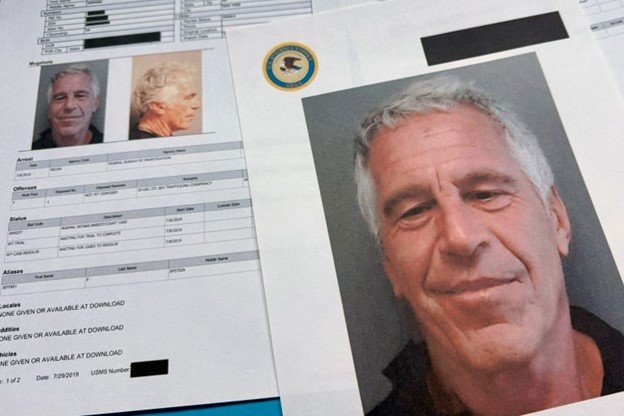
British politician Peter Mandelson has been released on bail after being questioned for hours by police over allegations that he leaked sensitive government information to the late convicted sex offender, Jeffrey Epstein, while serving as a government minister in the early 2000s.
The former United Kingdom ambassador to Washington was arrested on Tuesday on suspicion of misconduct in public office. His detention followed that of Andrew Mountbatten-Windsor, formerly known as Prince Andrew, who was also questioned regarding alleged misconduct connected to Epstein.
Epstein’s revelations have sparked investigations and resignations across Europe, though the impact in the United States has been comparatively muted.
How Epstein’s Files Have Shaken British Politics
The recent events represent one of the most dramatic political reversals in recent UK history. Just months ago, Mandelson held one of the nation’s most senior and prestigious diplomatic posts.
Since then, he has lost his ambassadorial role, endured a police raid at his home, and now faces potential criminal charges. He has stepped down from the House of Lords, the UK’s unelected upper chamber, and risks losing his title. If convicted, he could face a life sentence.
Police escorted Peter Mandelson to a waiting vehicle upon his arrest on February 23, 2026 [Screenshot via Reuters].
Prime Minister Keir Starmer’s appointment of Mandelson as ambassador, despite the politician’s declining popularity, prompted the resignation of his chief of staff, Morgan McSweeney, and raised doubts over whether Starmer can complete his term without further fallout.
The scandal has also entangled the royal family. Following Andrew’s arrest for allegedly leaking sensitive reports during his tenure as a trade envoy—a historic first for a senior royal—King Charles III insisted that “the law must take its course.”
British royal biographer Andrew Lownie, who interviewed Virginia Giuffre, Epstein’s accuser against Prince Andrew, has warned that the ongoing scrutiny could extend to King Charles himself, as questions mount about his knowledge of his brother’s actions.
The cases are part of a wider European response to recently released Epstein-related documents from the United States.
Across Europe, investigations are underway, and multiple public figures have resigned or faced pressure.
Andrew Mountbatten-Windsor, younger brother of King Charles, leaves Aylsham Police Station in a vehicle on February 19, 2026 [Phil Noble/Reuters].
European Repercussions
France has seen former Culture Minister Jack Lang resign from his role at a Paris cultural institution after the Ministry for Europe and Foreign Affairs sought to question him over Epstein-related contacts.
In Norway, ex-Prime Minister Thorbjorn Jagland has been charged with “gross corruption” after revelations he stayed at Epstein’s New York and Florida properties, visited his private island, and had Epstein cover expenses for him and his family. Jagland could face up to 10 years in prison if convicted.
Norway’s ambassador to Jordan, Mona Juul, also resigned following reports that Epstein bequeathed $10 million to her children. Meanwhile, Crown Princess Mette-Marit issued an apology after documents showed she vacationed at one of Epstein’s properties.
In Slovakia, national security adviser Miroslav Lajcak stepped down after disclosures of his Epstein connections. Prime Minister Robert Fico confirmed the resignation.
In much of Europe, even appearing in the Epstein files has triggered public scrutiny, investigations, or resignations. Governments have treated the document releases as sufficient grounds for formal inquiry, regardless of whether criminal liability is proven.
Why the United States Has Seen Limited Fallout
In the US, public awareness of Epstein’s crimes has simmered for years. Congressional Democrats and Republicans, including Ro Khanna and Thomas Massie, have pushed for the release of Epstein-related files, describing the elite connected to him as an “Epstein class” that operates above the law.
However, beyond Epstein and his associate Ghislaine Maxwell—serving a 20-year sentence for sex trafficking—few have faced criminal consequences. FBI records identify eight alleged co-conspirators, including Victoria’s Secret CEO Lex Wexner, Epstein’s former secretary Lesley Groff, and modeling agent Jean-Luc Brunel, who died in French custody. None, except Maxwell, has been convicted in connection with Epstein’s network.
Epstein first avoided federal prosecution in 2007-08 through a controversial non-prosecution agreement during George W. Bush’s administration. Subsequent administrations, under Barack Obama, Donald Trump, and Joe Biden, did not pursue widespread prosecutions tied to the broader network identified in the files.
Notable American Repercussions
Some US figures have stepped back or faced reputational damage. Former Treasury Secretary Lawrence Summers took leave from Harvard University amid scrutiny over his Epstein connections. Lawyer Brad Karp resigned as chair of Paul Weiss, and the NFL announced a review of Epstein-related correspondence with New York Giants co-owner Steve Tisch.
Longevity expert and physician Peter Attia resigned as chief science officer at David Protein and as a CBS News contributor after email exchanges with Epstein were revealed.
Others named in communications with Epstein, such as Steve Bannon, Commerce Secretary Howard Lutnick, and Elon Musk, have not faced charges. Musk denied visiting Epstein’s island despite discussing it by email. Former President Bill Clinton has testified to Congress about his friendship with Epstein. Donald Trump, who appears extensively in the files, has denied wrongdoing, as has the White House.